People ask me what I use. It usually starts with the sleeves, because a record turns up looking better than they expected and they want to know what it was sitting in.
So here is the whole bench. Every item below is something I buy with my own money, in quantity, on a schedule. Nothing is on this page because somebody paid to put it here. If I stop reordering something, it comes off the list.
Two rules drive most of this
Nothing PVC touches a record. PVC is the plastic that offgasses. Give it a few years in a warm room and it will haze the vinyl and soften the jacket it is sitting against. Polyethylene and polypropylene do not do that. If a sleeve does not say which plastic it is, that is usually your answer.
Paper does not touch the playing surface. Paper sheds fiber and holds static. Every time a record slides in and out of a bare paper inner, that grit rides along the groove. It is the slowest, most avoidable kind of wear there is.
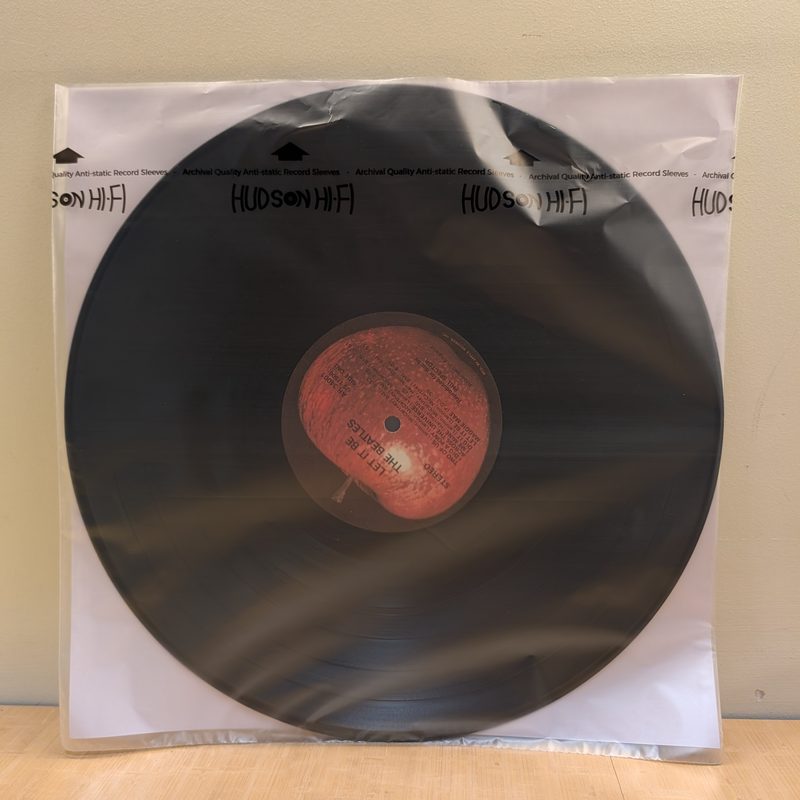
Hudson Hi-Fi Inner Sleeves
Why I use them. These go on everything. Three layers, with the poly facing inward and a rice paper layer in the middle doing the stiffening. The record touches plastic. It never touches paper.
The case. That construction solves both rules at once. HDPE is not PVC, so there is nothing in it to offgas into the jacket over the years. And because poly is what faces the record, you are not dragging paper fiber down the groove every time you pull it out. The rice paper in the middle is what keeps the sleeve from going limp when you are loading a shelf, which is the thing bare poly sleeves get wrong. They are miserable to handle.
Fair warning. They are thicker than the stock paper inner that came with the record. On a tight single jacket you will feel it going back in. On a gatefold it is nothing.
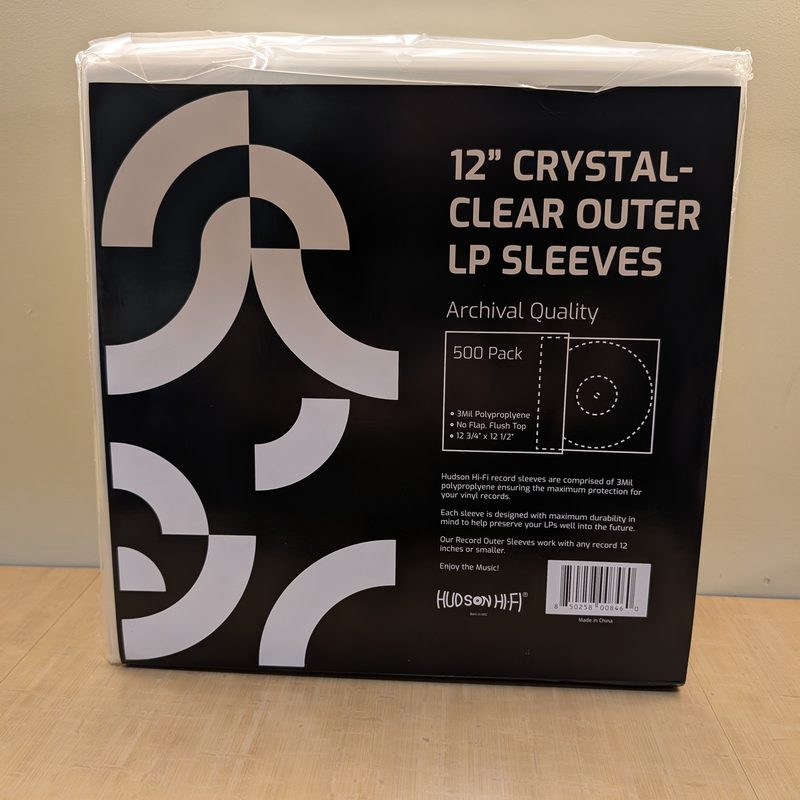
Hudson Hi-Fi Outer Sleeves
Why I use them. This is the crystal clear part, and it is the reason this page exists. There are two plastics in common use for outer sleeves and they do not look the same on a shelf. Polypropylene is the clear one. Polyethylene is softer and reads slightly cloudy, and a wall of records in cloudy sleeves looks dusty even when every cover underneath is clean.
The case. Clarity is not only vanity. If you cannot read a spine and see the cover, you pull the record out to find out what it is, and handling is exactly what wears a jacket down. Polypropylene also holds its shape instead of going slack, so the sleeve keeps supporting the cover corners rather than letting them roll. The tradeoff is that it creases if you fold it, so slide the record in and let the sleeve do the work.

10 Inch and 78rpm Outer Sleeves
Why I use them. Ten inch is the orphan size. Almost nobody makes sleeves for it, and most of what exists is too thin to bother with or cut for a 12 inch jacket so the record swims around inside.
The case, honestly. This one is polyethylene, not polypropylene, so by my own argument above it is a step down on clarity. I use it anyway. At 3 mil it is heavy enough to actually take a knock, and it is flush cut so it fits a 10 inch jacket properly. Shellac chips if you look at it wrong, so on 78s I will take thickness over clarity every time.
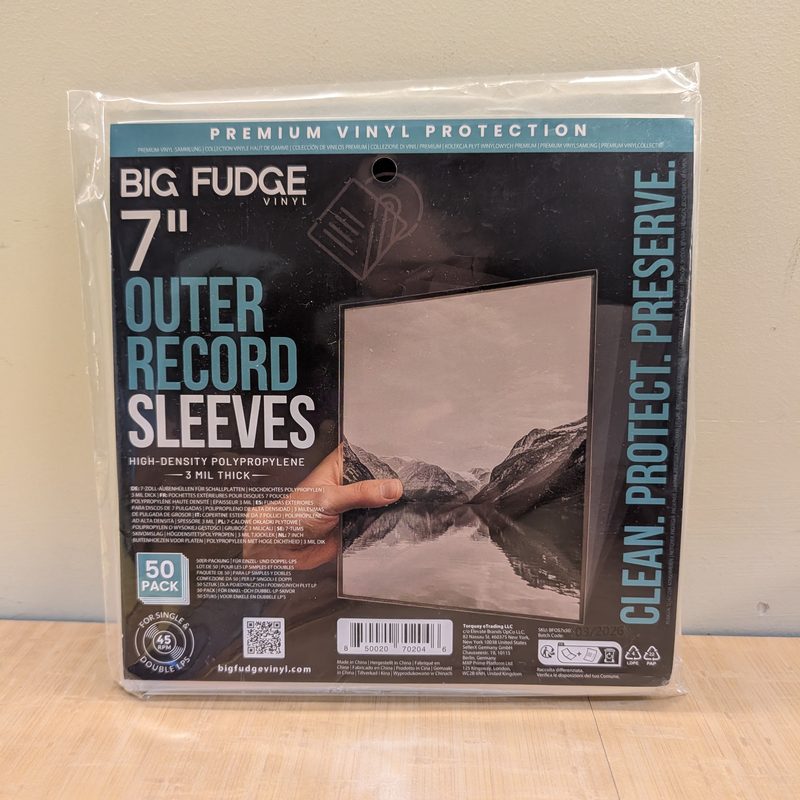
Big Fudge 7 Inch Outer Sleeves
Why I use them. Same logic as the 12 inch outers, scaled down. Polypropylene, so a picture sleeve stays readable through it.
The case. Forty-fives take more abuse than LPs because people flip through them faster and harder. A stiff outer is what keeps the top edge of a picture sleeve from fraying in the box. If you have any 45s with original picture sleeves, this is the cheapest protection you will ever buy for them.
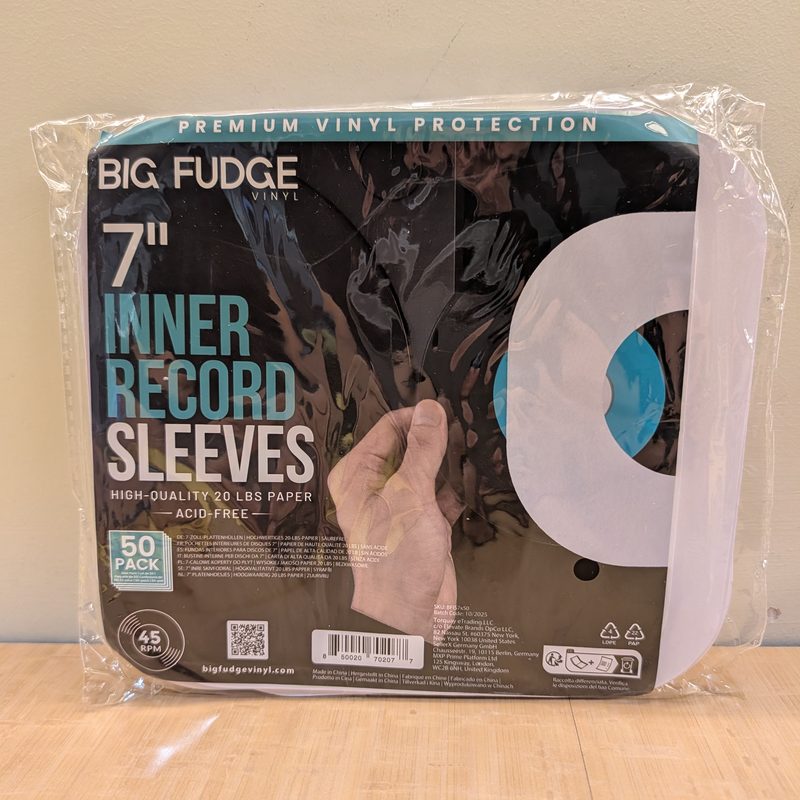
Big Fudge 7 Inch Inner Sleeves
Why I use them. These are what my 45s go into. Paper, not poly, which is the one place on this page where my own rule does not hold.
The case. Acid free is what matters here. The thin newsprint inners that shipped with a lot of 45s are exactly what yellows a label and leaves that brown halo around the spindle hole. Swapping those out is worth doing on its own. If you want the poly rule applied to your singles too, poly-lined 7 inch inners exist and they are the stricter choice.
This section is the seller side of the shop. If you are not mailing records to strangers, feel free to skip to the bottom.

LP Record Album Mailers
Why I use them. This is the box every record I sell goes out in. I buy them a hundred at a time and I have reordered them five times this year, which is the most honest recommendation I can give anything on this page.
The case. Variable depth is the whole feature. The box is scored at several depths, so you fold it down to the actual thickness of what is inside, whether that is one record or four. A record that cannot move inside the box cannot get a seam split, and a record rattling around in an oversized box is how most shipping damage actually happens. Folding down also keeps you under the next postage tier more often than not.
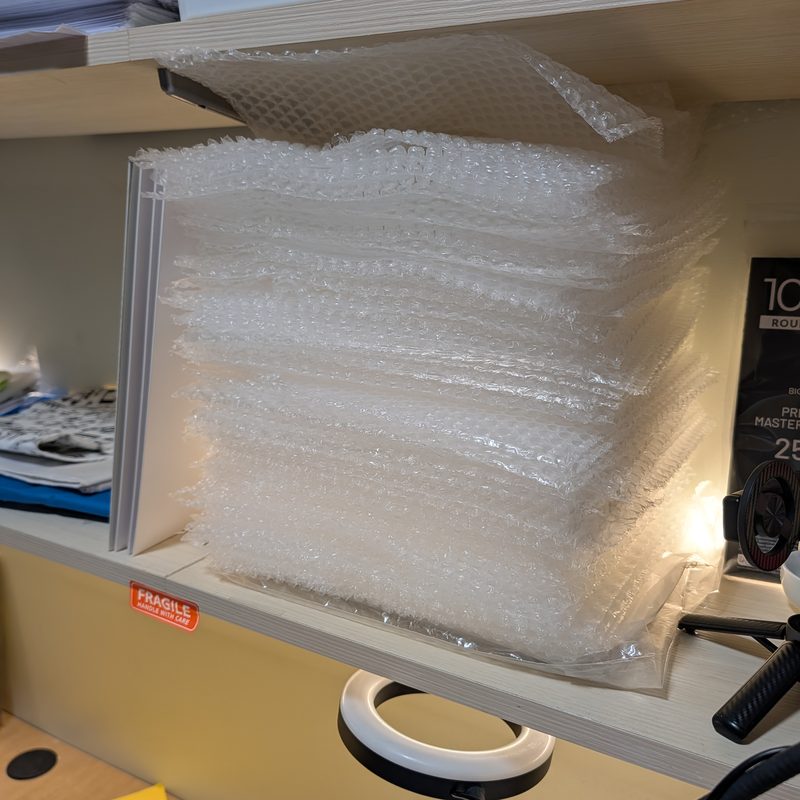
Bubble Wrap, Small Bubble
Why I use it. Small bubble, not the big stuff. Three sixteenths lies flat against a jacket. The large bubbles push on the cover and leave you with dimples on anything with a soft laminate.
The case. The perforation every twelve inches is the part that matters day to day. You tear instead of cut, which sounds trivial until you are packing thirty records on a Sunday afternoon and the scissors have gone missing again. Buying it 700 feet at a time works out cheaper per record than anything I can get locally.
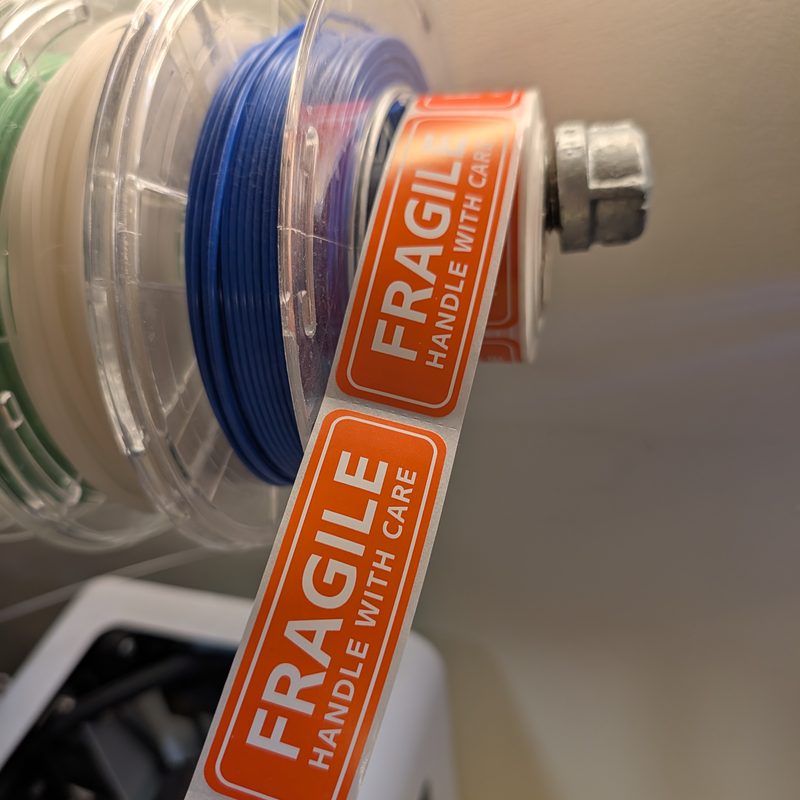
Fragile Stickers
Why I use them. Whether a sticker genuinely changes how a package gets handled is up for debate, and I am not going to pretend I have proof either way.
The case. They cost close to nothing at a thousand a roll, and I have had enough boxes turn up with a bent corner that I would rather put one on than wonder. Where it does clearly help is with the buyer. A package that looks like somebody cared on the way out tends to get opened carefully on the way in.

Removable Shipping Labels
Why I use them. Every record gets a SKU sticker on the outer sleeve the day it comes through the door. That is how I find it again three months later.
The case. Removable is the entire point, and it is the thing people get wrong. A permanent label on a poly sleeve either tears the sleeve coming off or leaves a gummy patch behind, and if somebody has stuck one straight onto the jacket, that is real money off the record. These peel clean when it sells. If you organize a collection at all, use removable adhesive and never put anything sticky on a cover.

Vinyl Record Dividers
Why I use them. The stickers are separate from the dividers, so you can run straight A to Z or write your own categories. Mine are not all letters.
The case. The real win is not that your collection is alphabetized. It is that you stop flipping. Every flip through a crate is another chance to catch a corner on the lip of the box, and the covers that wear out first are almost always the ones near the front that get pushed aside a hundred times to reach something else. Dividers cut that down to one flip.
Two machines here, and the one I actually use most is not the one that is easier to recommend. Both are below with the honest version of each.
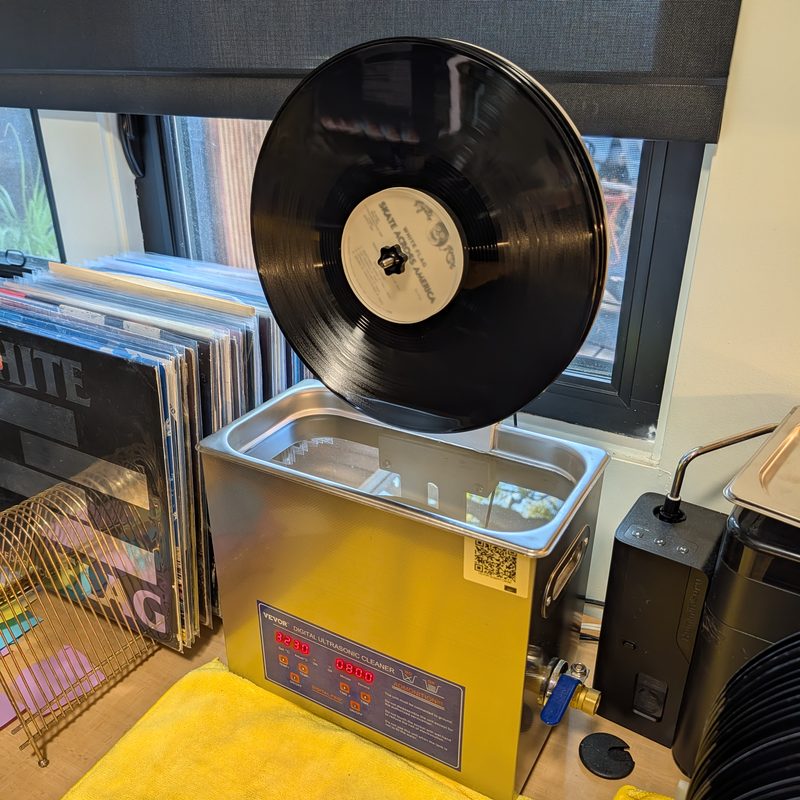
VEVOR 6L Ultrasonic Record Cleaner
Why I use it. This is the workhorse. I get ten records through per cycle instead of one, and when a collection buy lands and there are forty records sitting on the floor, that is the only thing that matters. This machine gets used far more than anything else in the shop.
How I run it. 32 degrees celsius, which is about 90 fahrenheit, for eight minutes. Then the records come straight out onto a rack with a fan pointed at them until they are dry. That is the whole recipe. The tank goes from 20 to 80 degrees and the timer runs to 30 minutes, so you can dial a gentler cycle for something fragile instead of taking whatever a sealed machine decides for you.
The catch, and it is a real one. There is no drying cycle, no automatic refill and no water filtration. You fill it, you run it, you pull the records out wet, you dry them yourself, and eventually you dump the tank and start again. It takes setup and it is not friendly. What you are buying is throughput and control, and you are paying for it with your own time.
On capacity. Ten per cycle is what I actually fit. Worth saying plainly, because the listing cannot make up its mind: the title claims eight and the spec bullet further down the same page says six. Ten is the number off my own rack.

GrooveWasher G-Sonic Concentrate
Why I use it. This is what goes in the water, and it is not optional. Plain water in an ultrasonic does a lot less than people expect.
The case. Water on its own has too much surface tension to get properly down into a groove. A surfactant is what lets the cavitation reach the bottom instead of skating across the top. G-Sonic is built to rinse away without leaving residue behind, which is the part that matters when you are air drying rather than vacuuming the record off. An ounce makes sixty gallons, so a bottle lasts a long time. I have bought two since 2024.
Do not use dish soap. It is the classic shortcut and it goes wrong twice. It foams, and foam kills the cavitation you are paying for, and it leaves a film in the groove that you will end up hearing.
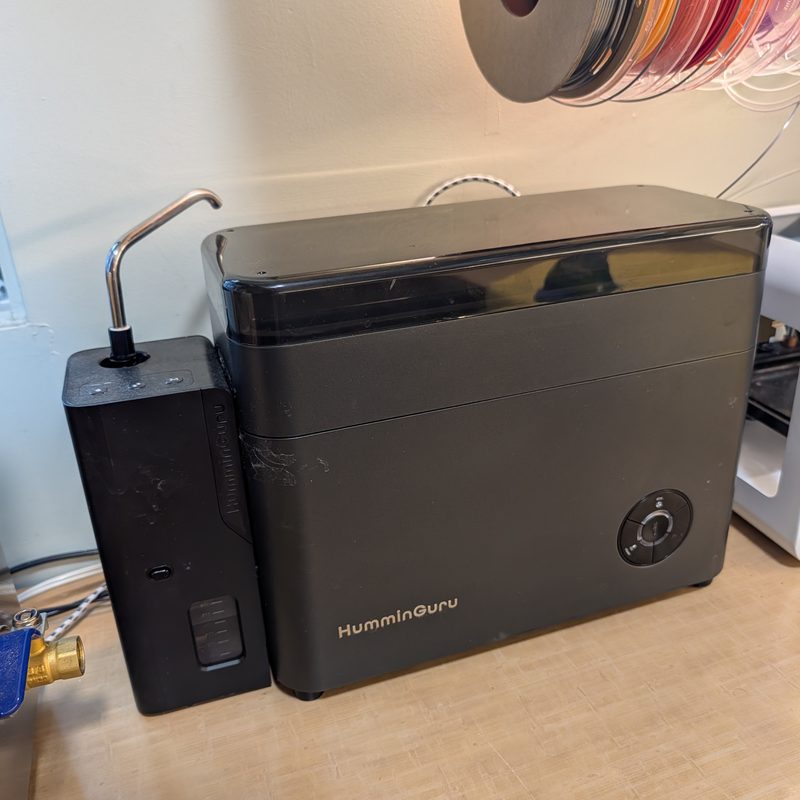
HumminGuru Ultrasonic Record Cleaner
Why I use it. This is the easy one. It dries the record for you, it filters the water, and there is nothing to set up. You put a record in and walk away, and it comes out clean and dry. If you have a collection rather than a shop, this is the one I would hand you.
The case. Ultrasonic does something a brush cannot, because it lifts out of the groove instead of dragging across it. A lot of what looks like permanent groove damage on an old record is forty years of grime, and it comes out. Below a hundred records, honestly, a carbon fiber brush and a decent fluid are fine and you should save your money. Above that, this starts paying for itself in records you stop writing off.
Where it loses. One record at a time. That is the entire difference between this and the tank above, and it is why the tank is the one covered in water rings in my shop. I still use this one. It is just not what I reach for when a crate of forty shows up.
About these links. They are Amazon affiliate links. If you buy through one I earn a small commission, and you pay exactly the same price you would have paid anyway. As an Amazon Associate I earn from qualifying purchases.
That does not change what goes on this page. Everything here is already on my bench, and where a product has a real drawback I have said so. Full details are in the privacy policy.
Questions about any of it, just ask. I would much rather answer an email about sleeves than have somebody spend forty dollars on the wrong thing. You can reach me at [email protected], or go see what is currently up at the eBay store.