Processing records is mostly discovery work. Something crosses the table you've never encountered — a band, a pressing, a catalog you knew nothing about — and by the time you've cleaned and graded it you're three tabs deep and considerably more educated than you were an hour ago. That's how Ten Years After happened. That's how a lot of things happen around here.
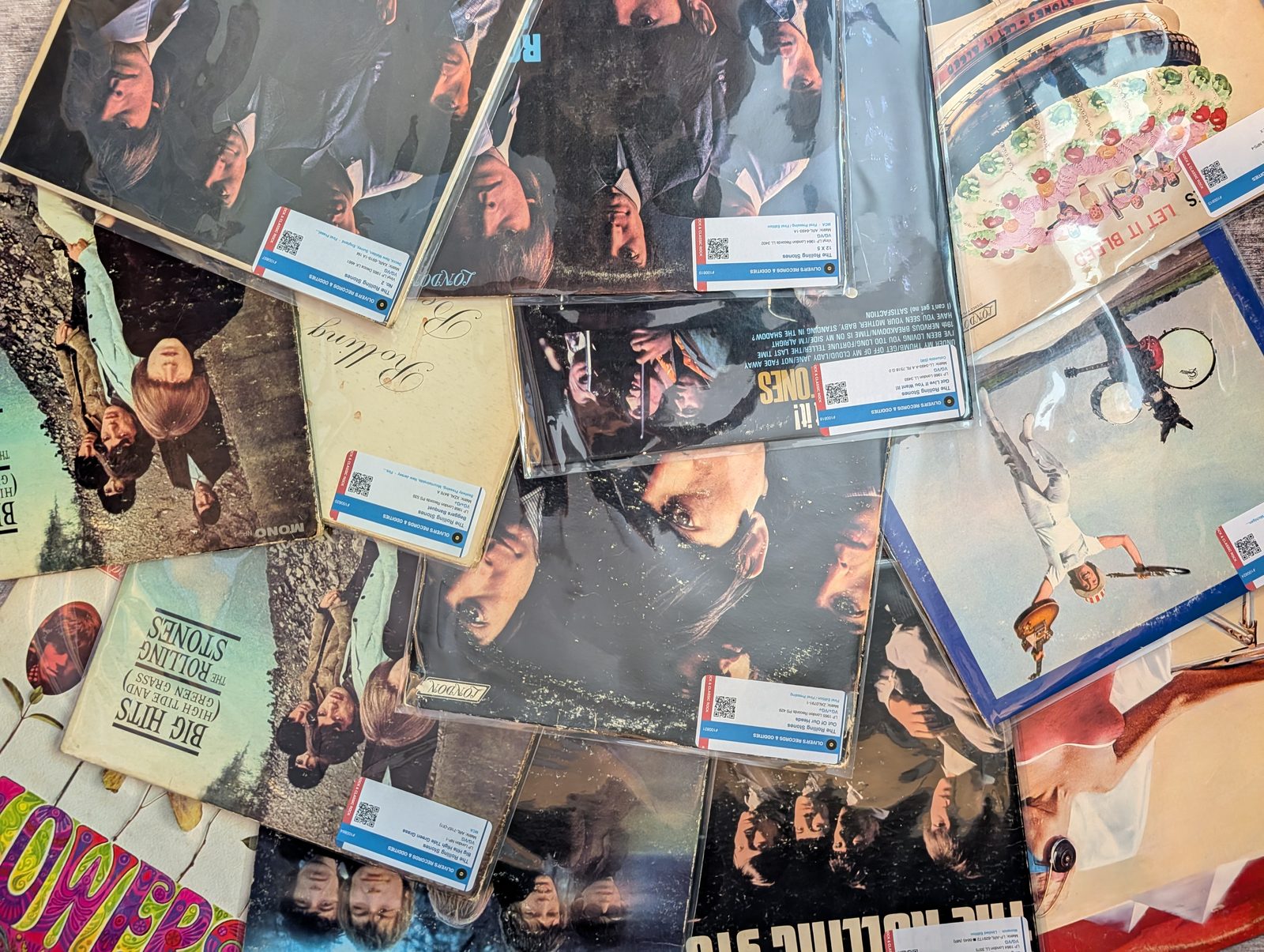
The Rolling Stones didn't happen that way. The Rolling Stones were already there. Grew up with them in St. Louis, can't remember not knowing who they were. So when a run of London Records-era Stones started landing in the same week — eight records, most of them from the heart of the catalog — I almost filed them away on autopilot. I knew what they were.
Then I put Let It Bleed on. And I forgot to stop working.
The London Records Run
From 1964 to 1971, the Rolling Stones' US releases came out on London Records — that dark blue London Stereophonic label, the one with the rectangle logo that looks like it was designed to be taken seriously. Ten studio albums, a handful of compilations, and a live record in seven years. From the raw, Chuck Berry-soaked debut through Sticky Fingers, which would come out on their own label in 1971.
These are the records worth knowing if you're building a Stones collection. The London pressings have a weight and presence that later reissues often sand down. They also tell the story of a band becoming the thing everyone remembers them as — which is a different experience than already knowing the ending.
Let It Bleed — London NPS 4, 1969
This is the one that's been on the turntable. NPS 4, the London Stereophonic pressing, Side One. I've listened to it four times this week while grading other records, which is not something I planned.
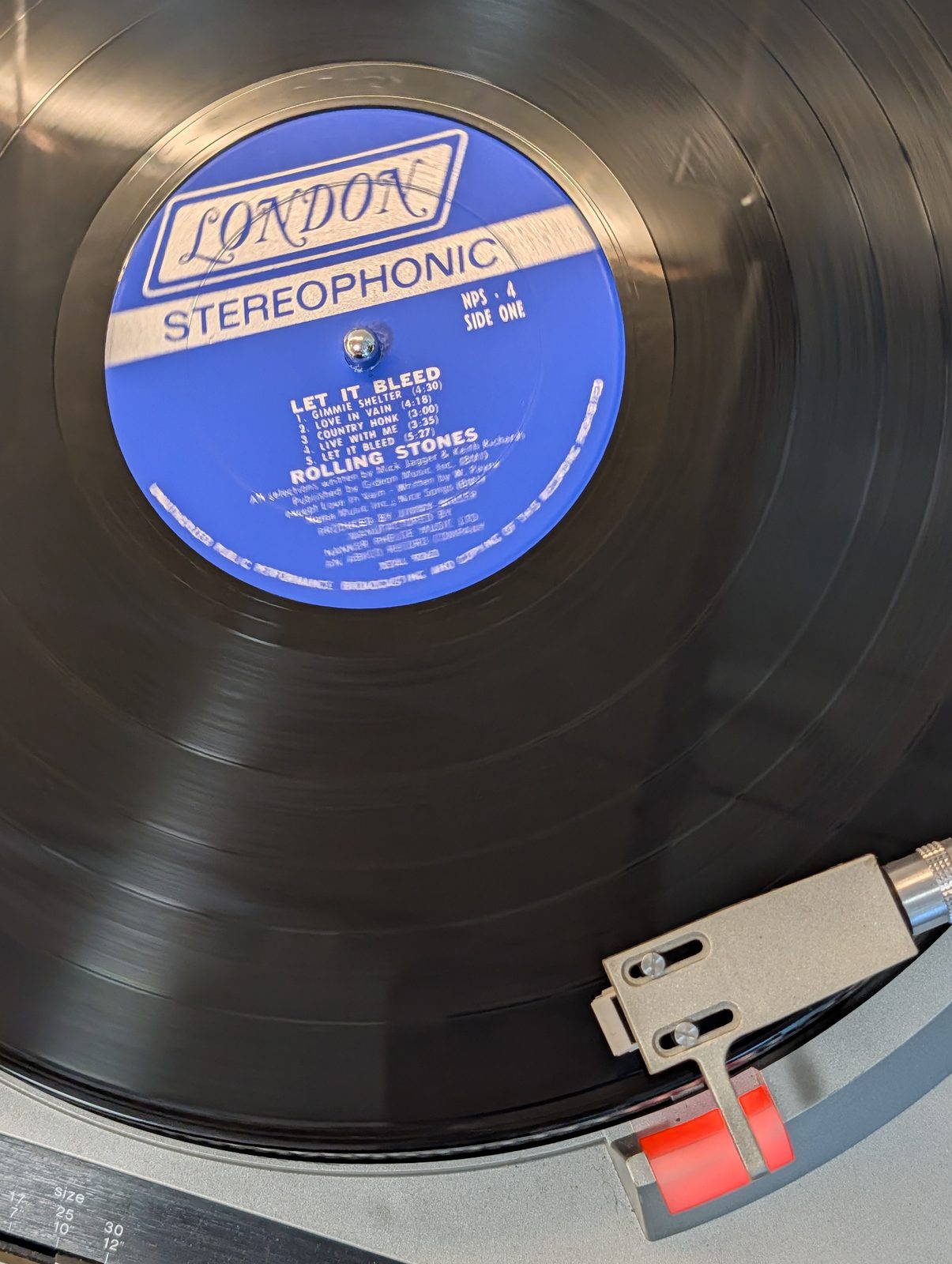
Let It Bleed came out in December 1969 — the same month as Altamont, which is maybe why it sounds the way it does. It's not a dark record exactly, but it's a serious one. Side One opens with "Gimme Shelter," Merry Clayton's voice entering about halfway through in a way that stops whatever else you're doing. That's not hyperbole. It actually does that.
What you notice when you listen to it as an album — really listen, front to back — is the range. "Love in Vain" is a Robert Johnson song that the Stones play like they wrote it. "Country Honk" is essentially "Honky Tonk Women" stripped to fiddle and acoustic guitar, which shouldn't work as well as it does. Side One closes with the title track, and by the time it ends you realize you've been paying attention in a way that most records don't ask you to.
Side Two has "Midnight Rambler." That's not an accident. That's a sequencing decision, and it's the right one.
Brian Jones appears on one track. He died in July 1969, five months before the album was released. Mick Taylor plays on most of it — his first appearance on a Stones studio record. If you want to understand how the band moved from one era to the next, Let It Bleed is the record that documents the seam. It's the last of one thing and the first of another, and it holds both without strain.
There's a version of knowing a record and a version of actually listening to it. I'd known Let It Bleed for thirty years. This week I listened to it.
The Rest of the Batch
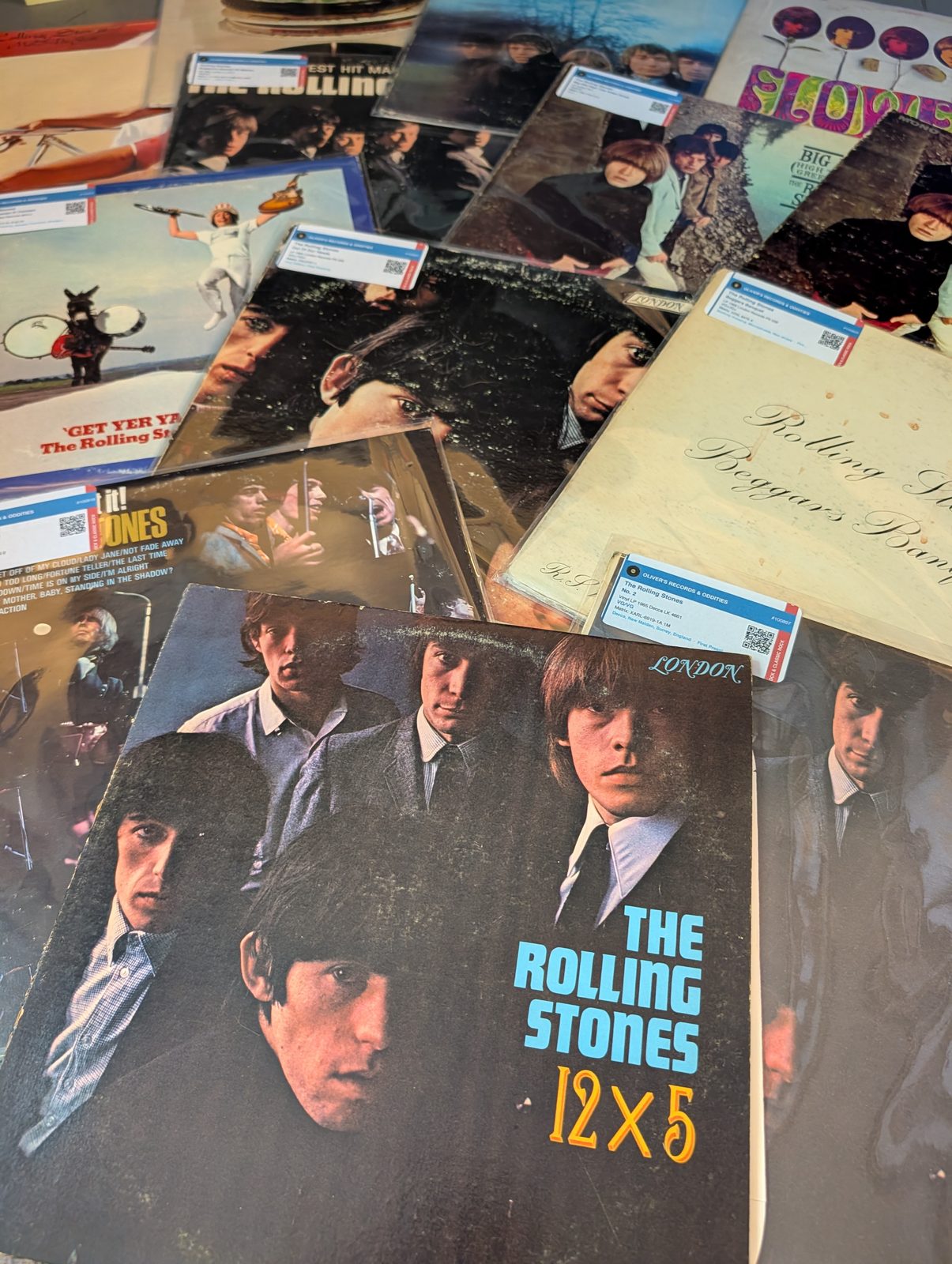
12 x 5 — 1964
The second US album. Mostly covers — Bobby Womack's "It's All Over Now," Chuck Berry's "Around and Around," a handful of others — plus a few Jagger-Richards originals that show how quickly they were learning. If you want to understand what the Stones were built on before they started writing everything themselves, this is where to start. Pure early-sixties R&B filtered through a band that couldn't stop playing it.
Beggars Banquet — 1968
The pivot record. After the psychedelic detour of Their Satanic Majesties Request, the Stones came back with acoustic guitars and stripped-down arrangements. "Sympathy for the Devil" opens it, "Street Fighting Man" closes it. The sleeve is plain — off-white, script lettering, looks like a bathroom wall, feels entirely intentional. Worth picking up if you're serious about the catalog.
Flowers — 1967
US-only compilation of non-album singles, B-sides, and rarities from the London years. "Ruby Tuesday," "Let's Spend the Night Together," a few things you won't find on the studio albums. Easy to overlook because it doesn't fit neatly into the discography, but if you collect this catalog it fills real gaps — and it's pressed on the same London blue label as everything else from the period.
Get Yer Ya-Ya's Out! — 1970
The live document. Recorded at Madison Square Garden in November 1969 — just weeks before Altamont and the release of Let It Bleed. Mick Taylor's first major tour appearance on record. If there's a single record that captures what the Stones sounded like when they were the best live rock and roll band on the planet, this is probably it. "Jumpin' Jack Flash." "Sympathy for the Devil." "Midnight Rambler" live, which goes somewhere different than the studio version. Worth the spin just to hear the difference.
What's in the Store
Three of the eight are live on eBay now. The rest are going up this week.
The Rolling Stones — Big Hits (High Tide and Green Grass)
The US compilation that introduced millions of people to the early catalog. "Paint It, Black." "Satisfaction." "Get Off of My Cloud." Not a substitute for the albums, but a strong London pressing and a natural starting point if you're new to collecting the catalog. This copy grades VG+/VG+ — clean vinyl, clean sleeve.
The Rolling Stones — The Rolling Stones In Concert
Rolling Stones — Made in the Shade
Made in the Shade spans the full early-to-mid 70s run — Sticky Fingers through It's Only Rock 'n' Roll — with "Tumbling Dice," "Brown Sugar," "Angie," and more. The sleeve has honest wear (VG) but the vinyl grades EX and plays beautifully. Good entry into the post-London catalog at a fair price.
The rest of the batch — Let It Bleed, 12 x 5, Beggars Banquet, Flowers, and Get Yer Ya-Ya's Out! — will be live in the eBay store this week. Worth checking back.
And if it's been a while since you listened to Let It Bleed — actually listened, front to back — that's worth doing before anything else.