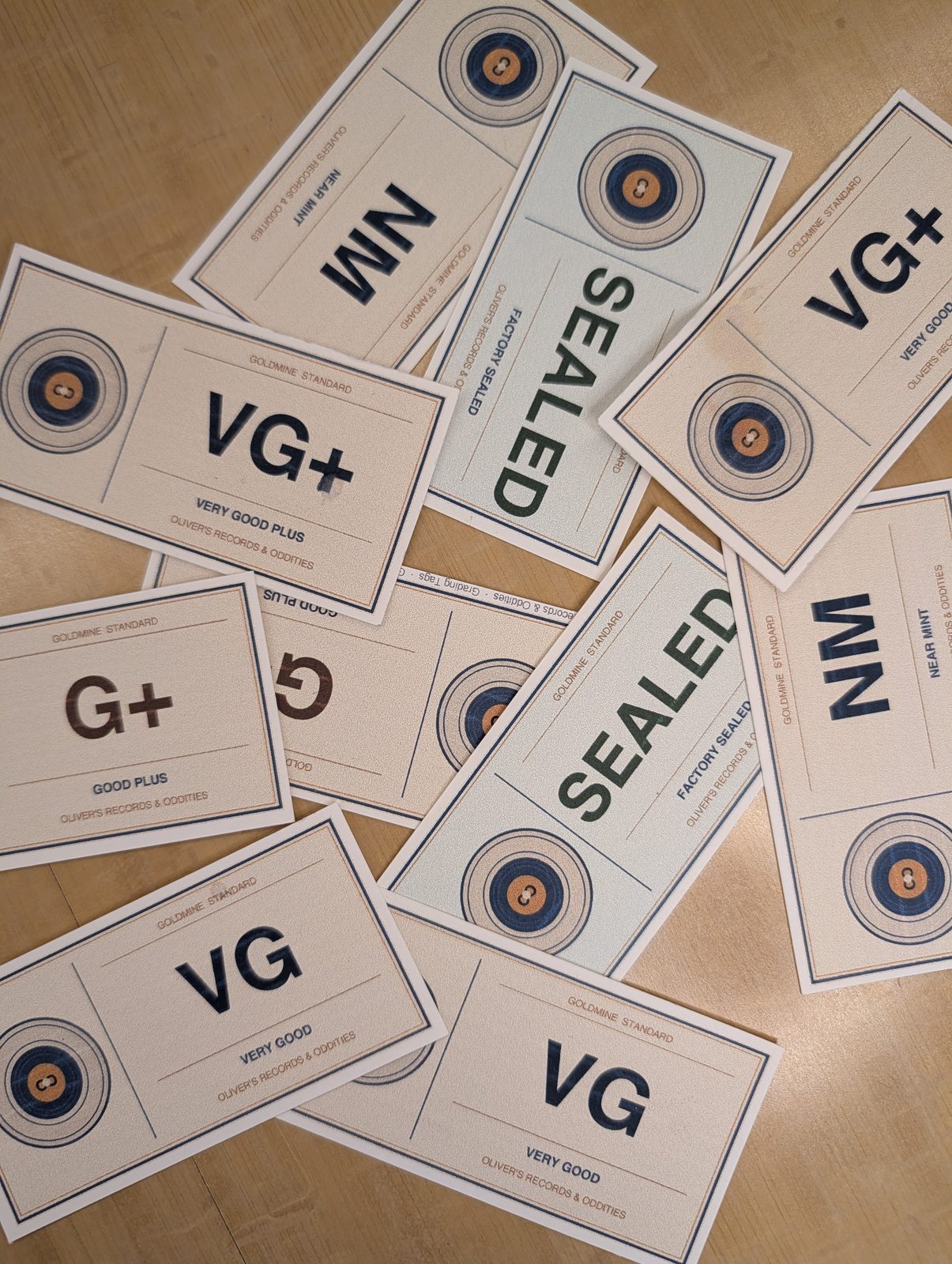
Every record I list gets a Goldmine-standard grade. NM, VG+, VG — those two or three characters are supposed to tell you everything you need to know before you buy. In practice, they mean very different things depending on who's doing the grading. So I want to be upfront about how I approach it, what my grades actually mean, and what you should expect when a record from this shop lands on your doorstep.
You'll notice every eBay listing photo includes one of those placard cards — the same ones you see above. I photograph every record with its grade card right next to the vinyl so the condition is front and center before you even read the description. No hunting through the fine print.
The short version: I grade conservatively. I'd rather you put the needle down and be pleasantly surprised than feel like I oversold you something.
The Philosophy
Most of what I sell grades out at VG+. That's my bread and butter — records that play clean, look good, and will hold their value. When I'm evaluating a record, I'm looking at it under good light, playing it through, and asking myself honestly: does this warrant the grade I'm about to put on it?
I'd rather you be pleasantly surprised than disappointed. So when in doubt, I grade down.
I almost never go above VG+ unless a record is genuinely, demonstrably flawless — think still in the shrink, or a pressing that came out of a collection where it clearly hadn't been played more than once or twice. The reason is simple: VG+ is a very good record. NM means virtually no signs of handling or play whatsoever. That's a high bar, and if I'm unsure, the record stays at VG+.
On the other end, I do occasionally list VG records — but only when the title is worth it. A VG record has audible surface noise, light scratches you can see under a lamp, and you'll hear it. That's not right for every buyer. But if you want a specific pressing — a first edition, a cool label variant, a hard-to-find title — and you're not willing to pay NM prices for it, a clean VG can be a good deal. I only put VG records in the shop when the record itself earns it.
Near Mint — What It Looks Like
This Nirvana Unplugged in New York is a good example of what NM means to me. Purple vinyl, DGC pressing — put it under a light and you're looking at your own reflection. The grooves are clean, the surface is unmarked. When you press play, you hear the music and essentially nothing else.
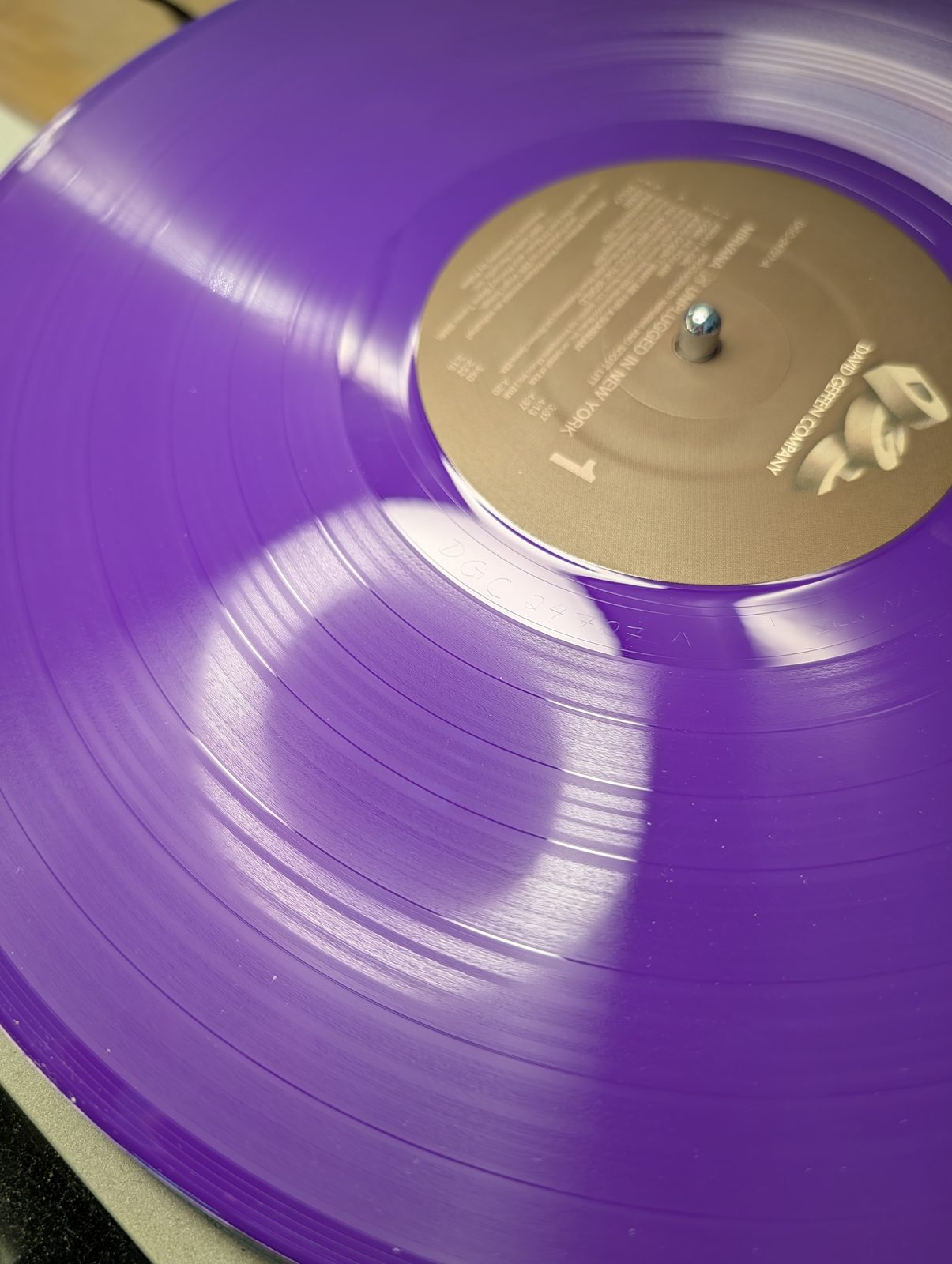
Near Mint
Looks almost exactly as it did when it left the pressing plant. May have been played once or twice. No scuffs, no scratches visible under direct light. Plays silently. This is the top of the scale and I use it sparingly.
Very Good Plus — The Standard
Very Good Plus
The majority of what I sell. A VG+ record has been played and handled, but carefully. Under a strong light you might catch a faint hairline or two — but nothing that translates to audible noise during play. These records look excellent and sound excellent. For most buyers, VG+ is the right call.
I don't have a VG+ example here because, frankly, they can look nearly identical to NM without direct side-by-side comparison. The difference is usually a few faint marks that you have to hunt for. If I grade something VG+ and you can hear surface noise beyond the occasional soft tick, I want to hear about it.
Very Good — For the Right Buyer
This Jimi Hendrix The Cry of Love is a VG record. It's also a first US pressing on Reprise Records — the original orange label, made in the USA. Look at the vinyl and you can see the wear. Light scratches across the surface, visible swirl marks. Put it on and you'll hear a background sizzle throughout, particularly in the quieter passages.
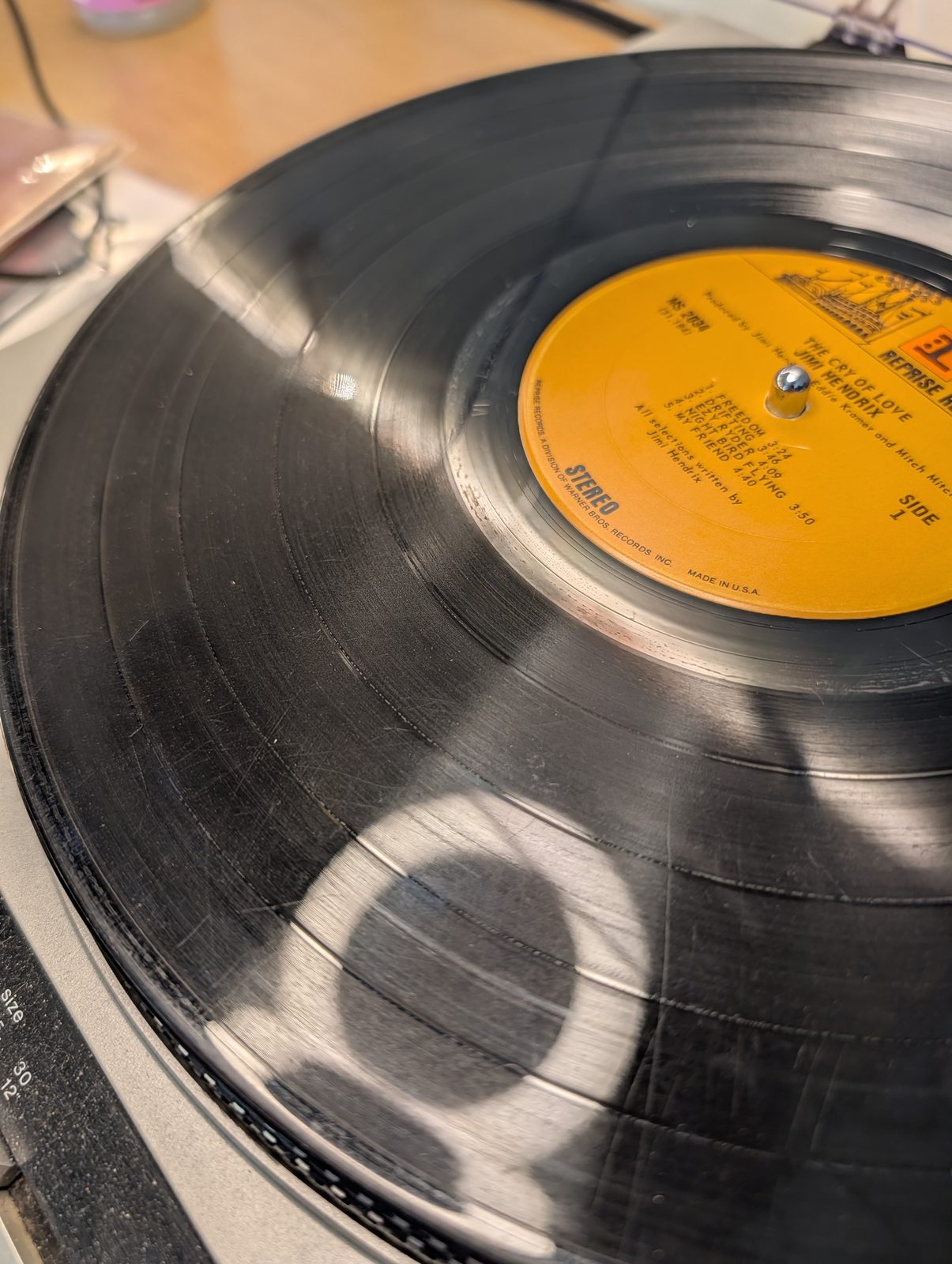
Very Good
A well-played record. You'll see scratches under light and hear background noise — a light sizzle or occasional tick during play. It's not a pristine listening experience, but the music is all there. I only list VG records when the title justifies it: a hard-to-find pressing, a classic record, something worth having even if the vinyl isn't perfect.
That Hendrix record is in the shop because it's a real piece of history — a first pressing of one of the great guitar records ever made, and it's genuinely playable. If you want that specific pressing and don't want to pay NM prices for it, this is what VG looks like. Eyes open, no surprises. View this listing on eBay →
When It Goes in the Bin
Not every record makes it into the shop. This Keith Sweat 12" came in looking rough, and after inspection it was clear it wasn't going to anyone. Deep gouges, severe scuffs, pressing deformations. It would skip. There's no grade for this — it's just gone.
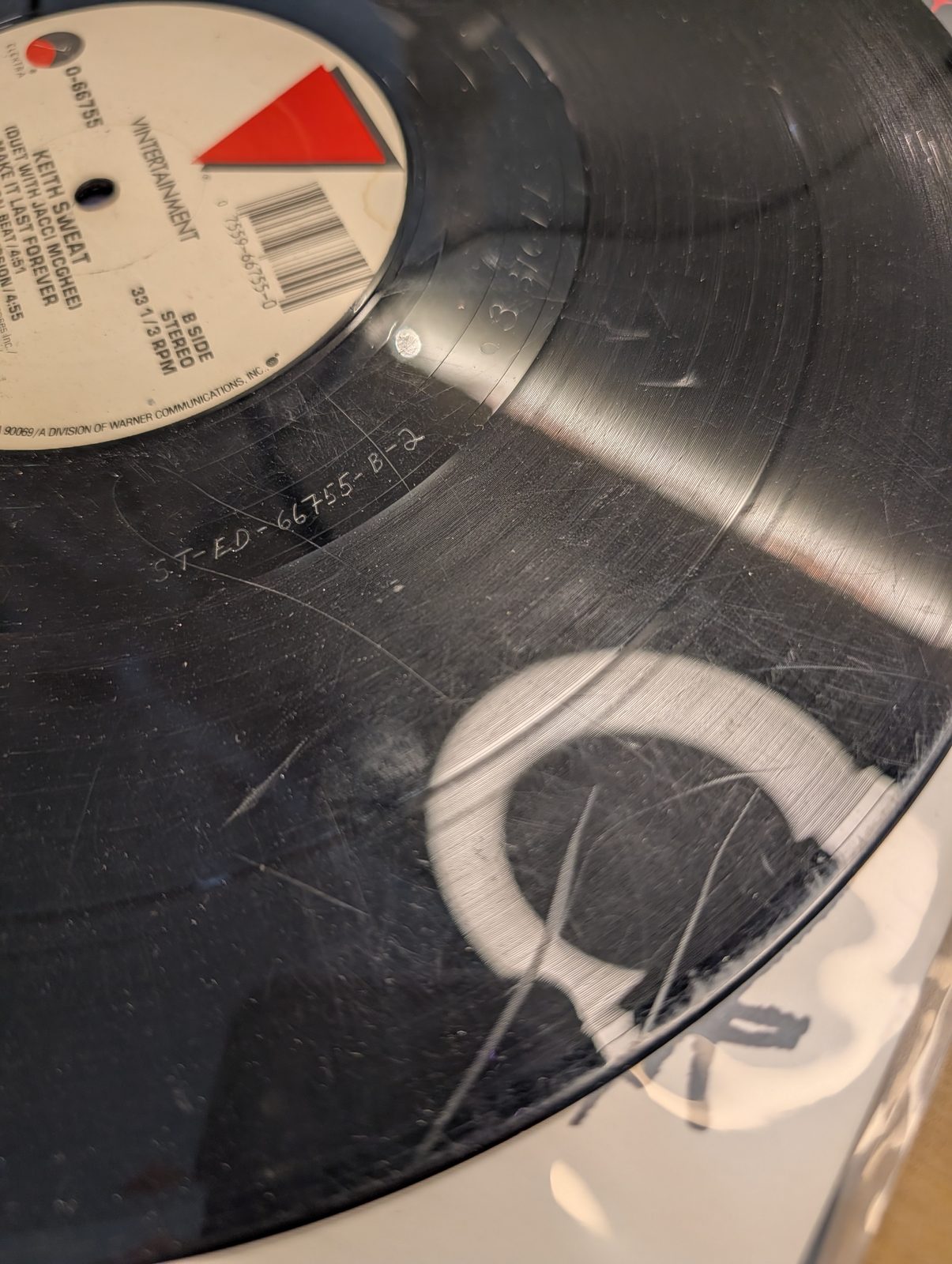
I mention this because it matters: every record in this shop has been played and assessed. If it's listed, it plays. The bins have already claimed the ones that don't.
One More Thing — Everything Gets Cleaned Before It Ships
Before any record leaves this shop, it goes through my HumminGuru ultrasonic cleaner. Ultrasonic cleaning uses high-frequency sound waves to pull embedded debris out of the grooves — the kind of contamination that a brush and cleaning fluid can't fully reach. It makes a noticeable difference, especially on older records that have been sitting in collections for decades.
That Hendrix VG in the video above? It hasn't been through the HumminGuru yet — I filmed it dry so you could hear a realistic baseline for VG surface noise. When it ships, it'll be cleaner. Not VG+, let's be honest — the physical marks are still there — but the audio noise floor will come down a bit.
HumminGuru Ultrasonic Record Cleaner
The best investment I've made for the shop. Every record ships cleaner than it arrived. If you're serious about the sound quality of your collection, ultrasonic cleaning is genuinely the next level up from a brush.
As an Amazon Associate I earn from qualifying purchases.
Any questions about a specific listing's grade, just ask. I'd rather spend two minutes answering a question than have a record show up and not meet expectations. Browse current listings at the eBay store.