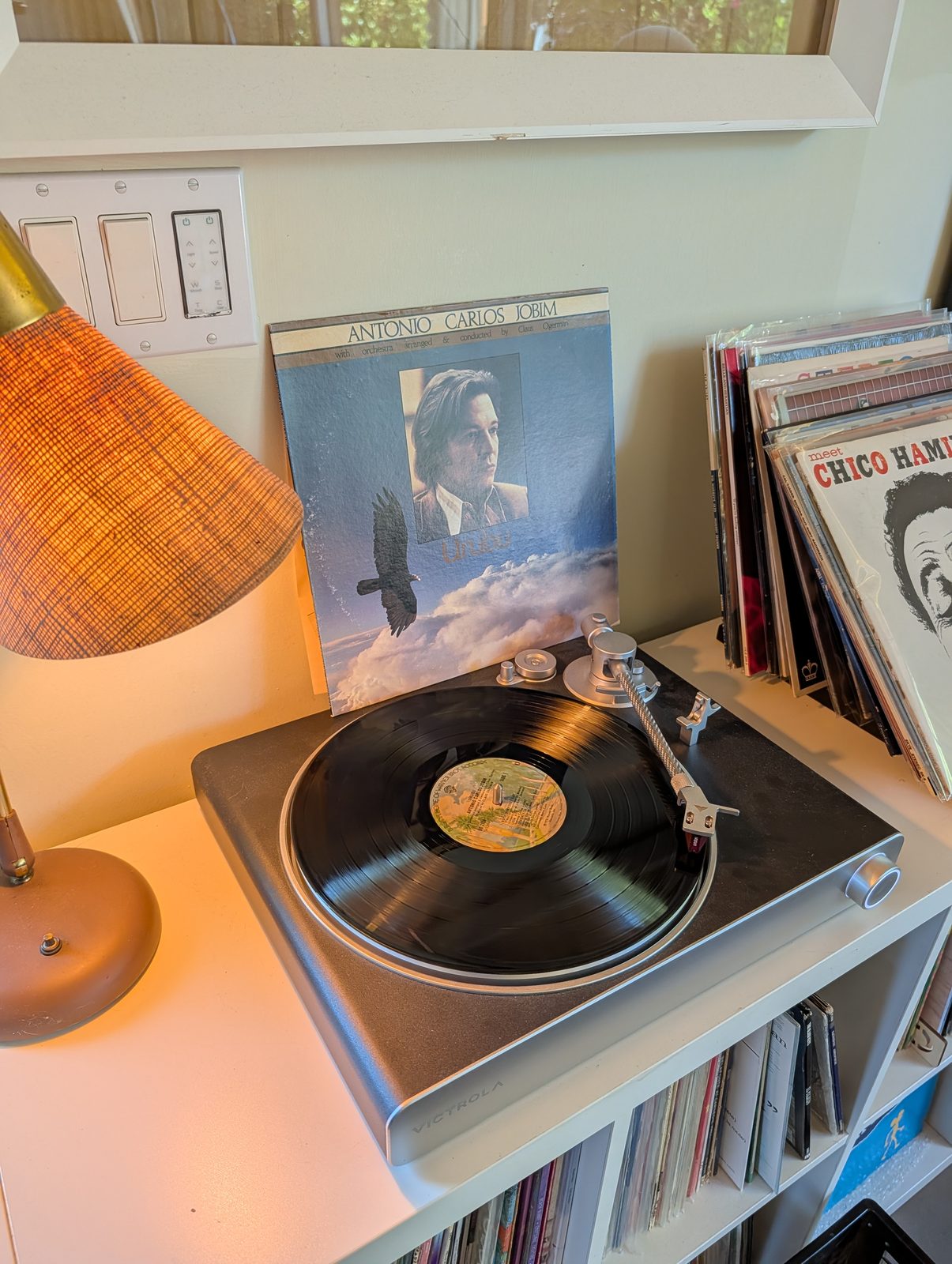
Some records walk through the door and stop you cold. This week, a VG+ copy of Urubu — Tom Jobim's 1976 Warner Bros. LP — landed in the shop, and it's one of those albums that reminds you why you got into this whole thing in the first place. It came in as part of a larger Brazilian haul, tucked between a couple of Jobim compilations and a stunning Elis Regina live LP, but Urubu was the one that made me set everything else down.
Who Was Tom Jobim?
Antônio Carlos Brasileiro de Almeida Jobim — "Tom" to everyone who loved him — was, without exaggeration, one of the most important composers of the twentieth century. Born in 1927 in Rio de Janeiro, Jobim was the principal architect of bossa nova: the seductive fusion of samba rhythm, jazz harmony, and classical restraint that washed over the world in the late 1950s and never really left.
He wrote "The Girl From Ipanema." He wrote "Corcovado," "Wave," "Desafinado," "Água de Beber." If you've ever been in a hotel lobby, a coffee shop, or a dentist's waiting room and heard something that felt simultaneously languid and alive — that was probably Jobim. But reducing him to background music is like calling Coltrane "something for while you cook." The melodies are so effortlessly beautiful that they hide how sophisticated the harmony underneath really is.
Jobim's melodies feel remembered rather than composed — as if they were always there and he was just the first to write them down.
By the mid-1970s, Jobim had already spent two decades reshaping popular music. He'd collaborated with Sinatra. He'd written Sinfonia da Alvorada, a full symphonic suite commissioned for the inauguration of Brasília. He'd done the Stan Getz record that made bossa nova a household name in America. Urubu arrived at a moment when he had absolutely nothing to prove — and that freedom shows.
What Is Urubu, Exactly?
Released in 1976 on Warner Bros. Records (catalog BS 2928), Urubu is a late-career gem that tends to get overshadowed by Jobim's earlier canonical work. The title is the Portuguese word for the black vulture — the wide-winged birds that circle lazily over the hills of Rio de Janeiro — and there's something fitting about that image. The album soars without hurrying.
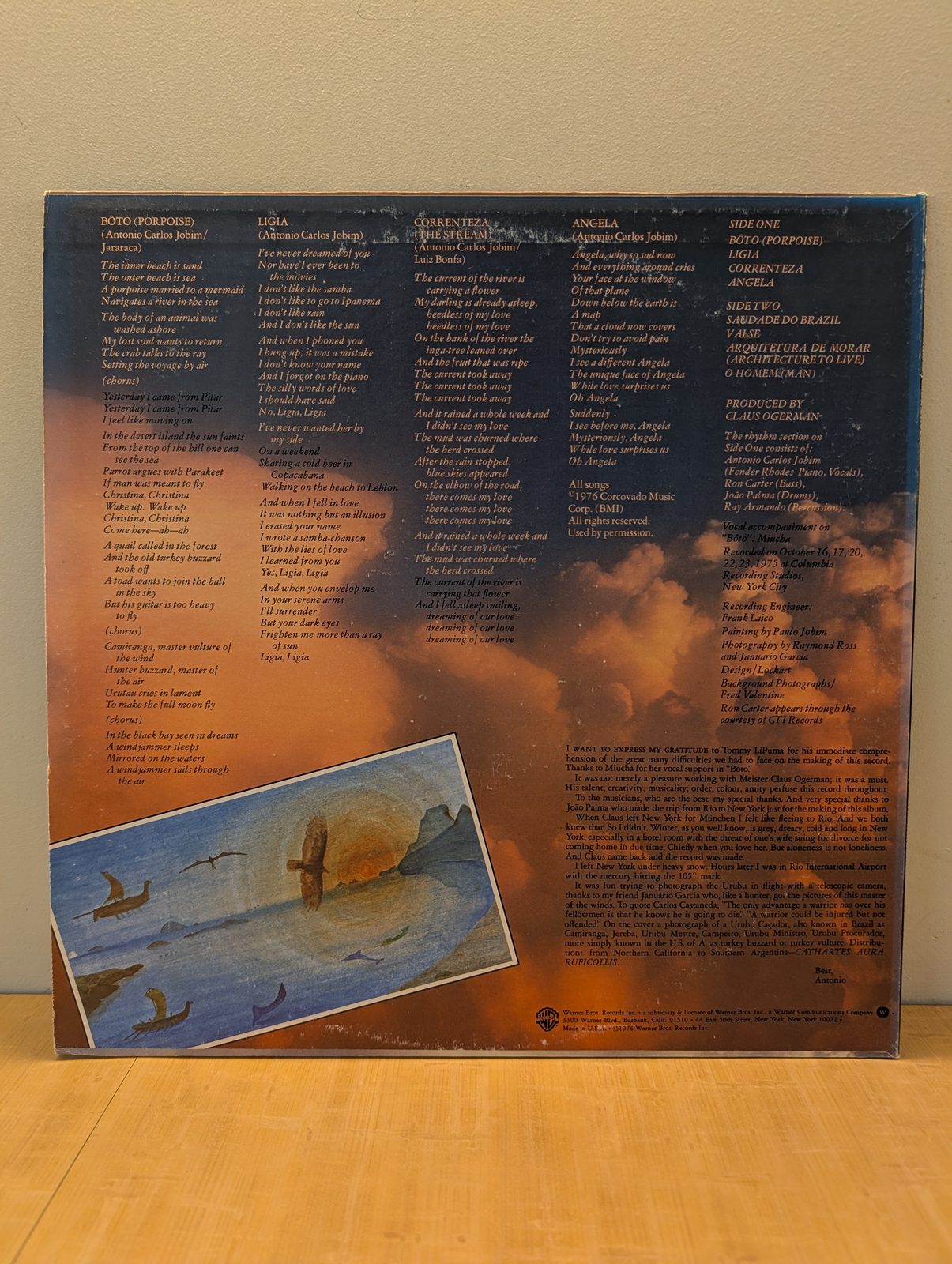
It was recorded in New York in October 1975, where Jobim spent considerable time during this period. Ron Carter anchors the bottom end with his characteristic restraint. Claus Ogerman — one of the great arranger-conductors of the era — wrote the orchestral charts and produced the session, and his string writing gives the album a warm, cinematic depth that lifts Jobim's piano above simple accompaniment. Jobim sings throughout — his voice not technically polished, but warm and completely honest — and plays with the kind of ease that takes a lifetime to acquire.
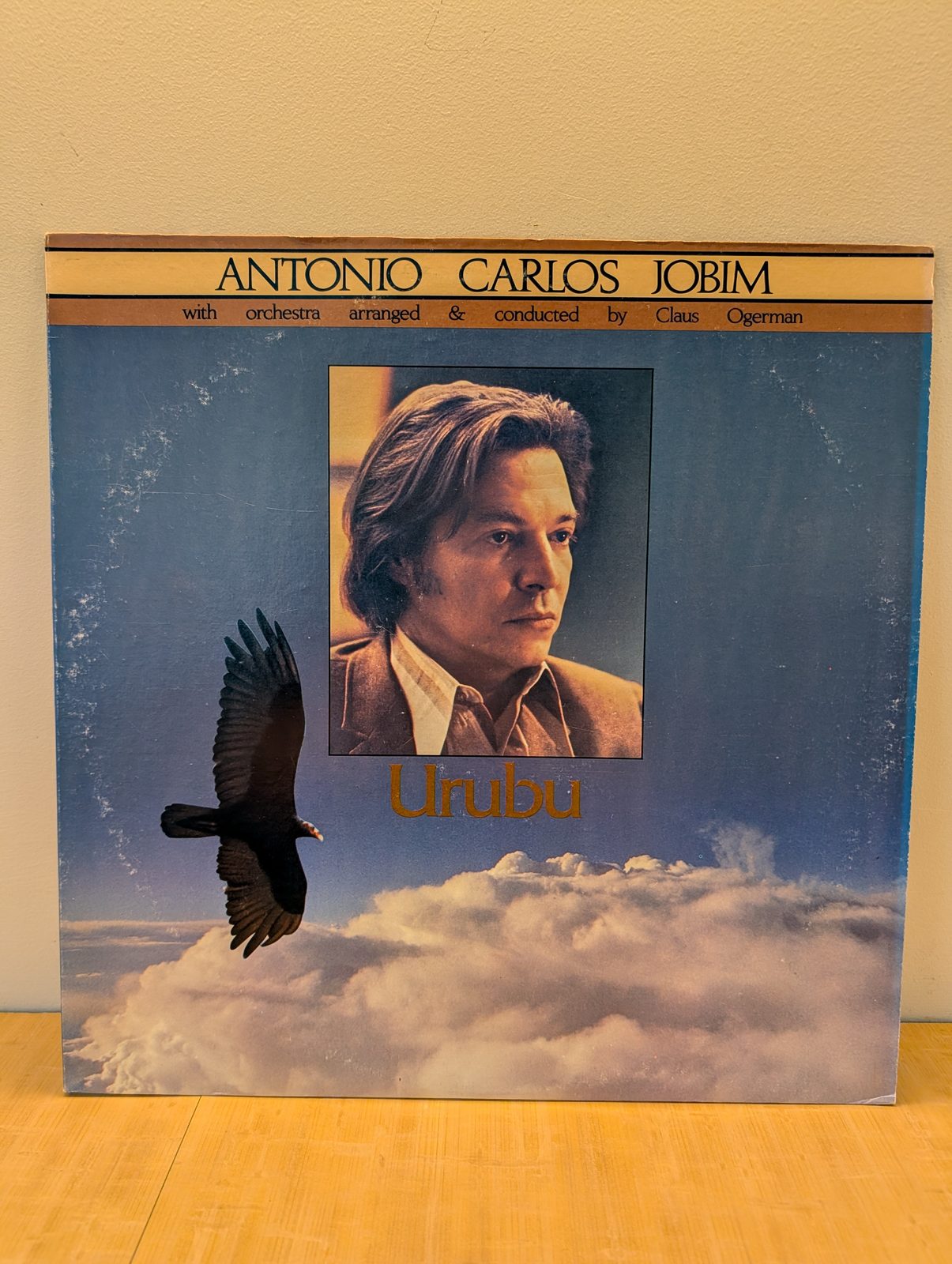
The track "Bôto" draws on a Brazilian folk legend about a river dolphin that takes human form at night, which is the kind of source material only Jobim would think to set to music — and only Jobim could make feel completely natural. "Angela" has an easy coastal warmth to it. "Saudade do Brasil" is the album's sprawling centerpiece, an eight-minute meditation on longing that earns every second of its runtime. The whole record feels like late afternoon on a veranda overlooking the sea.
Antonio Carlos Jobim — Urubu
1976 · Warner Bros. Records BS 2928 · Original US pressing · VG+/VG+ · $49.99
Why This Pressing?
The copy we have is the original 1976 US pressing, and it grades VG+/VG+ — the vinyl plays clean, the sleeve is solid. For a nearly fifty-year-old record, that's genuinely rare. These mid-70s Warner Bros. pressings were made during the apex of American vinyl manufacturing, and they have an openness and depth that later reissues haven't quite replicated.
Finding a clean US original of Urubu is trickier than you'd expect. Brazilian pressings circulate more freely, but the Warner Bros. release has a particular sonic character that serious listeners tend to seek out. If you're building a serious Jobim collection and Urubu isn't in it, this is a good moment to fix that.
A Brazilian Week at the Shop
It wasn't just Jobim this week. The same haul brought in Elis Regina live at the 13th Montreux Jazz Festival — recorded in 1979 and issued on WEA in 1982, and genuinely hard to find in this condition — along with Djavan's Meu Lado (first pressing on CBS), Maria Creuza, Mocidade Independente, and a few Brazilian TV soundtrack LPs that almost never make it out of South America. I also picked up a second Jobim title: The Girl From Ipanema on the British MFP label, which is a good budget entry point if you're just getting into his work.
Prices on Brazilian records have been moving steadily upward, and for good reason — the catalog is deep, the pressings are often outstanding, and most US collectors are still only scratching the surface. Worth paying attention to.
Browse all current listings at the eBay store, or subscribe below to get new additions in your inbox each week before they move.